

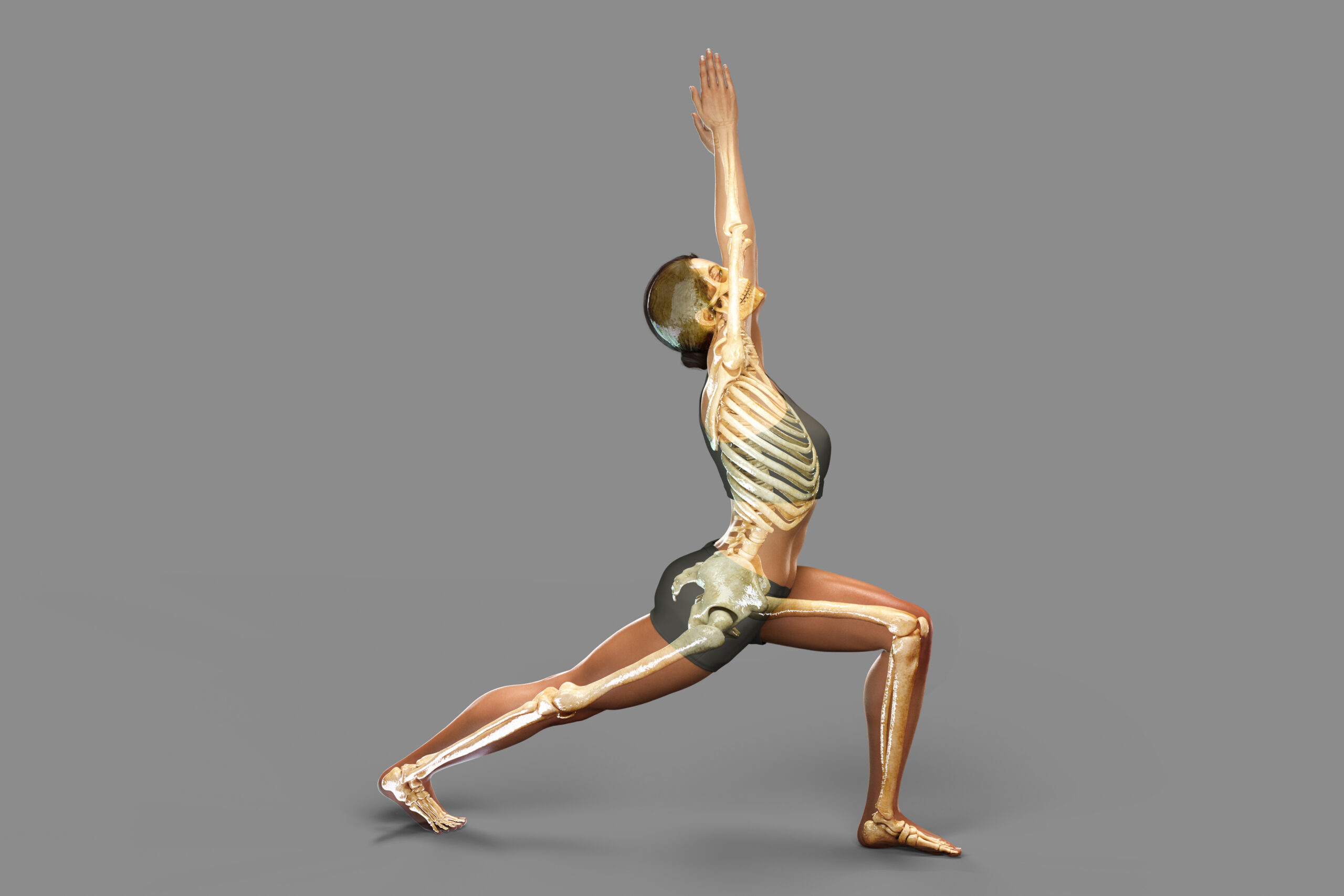
07 Jun Moving Your Bones Wisely




My diagnosis of osteopenia came almost ten years ago. It’s what sent me down this path of learning how to move appropriately and wisely, not out of fear, but out of genuine understanding: about bones, about yoga, and about aging.
Let’s consider this:
What are you moving when you move?
The Fear That Creeps In
When we receive a diagnosis of low bone density or osteoporosis, we’re often handed a list of rules: Don’t forward bend. Don’t twist. Keep a straight spine. Hinge at the hips. Practice safe yoga. Spare the spine.
Fear creeps in. We stop trusting our bodies.
And yet, forward bends and twists are everyday movements. We pick up our socks off the floor. We tie our shoes. While driving, we rotate our spine to back out of the driveway. We are doing these things all the time, whether we think about it or not. The question isn’t whether to do them, it’s how to do them wisely.
Recent movement guidelines have been revised from the old “don’t do this” model into something more nuanced. What they tell us to limit is not flexion or rotation themselves, but rather specific qualities of movement: those that are repeated or sustained under load, at end range, or executed rapidly and forcefully. The 1984 study that led everyone to fear spinal flexion involved crunching the spine in one spot, very fast and very forceful, and yes, that caused vertebral compression fractures. But that’s not what forward bending in daily life looks like.
We don’t have to be so afraid.
What You’re Actually Moving
When you move, you are not just moving a frail little spine.
You are moving a whole, interconnected system.
There is more to the story but for simplicity sake let’s consider that your bones receive and transmit forces through the entire body. This is why we do weight-bearing exercise. When astronauts go into zero gravity, their bones essentially say, we don’t need to be strong right now, and they begin to lose density. Force matters.
Your ligaments connect bone to bone across joint spaces. Your tendons connect muscles to bone. Your muscles move your bones into positions where they can do their jobs effectively. There’s a vital muscle-bone crosstalk that happens when we stay strong and mobile.
And then there’s fascia, a body-wide system that goes far beyond what we once called “connective tissue.” Fascia transmits support, sensation, and adaptation throughout your whole body. Emerging science is revealing that fascia plays roles in joint stability, inflammation response, wound repair, immune health, lymph flow, mental well-being, and even hormonal and neurological regulation. A little bit of movement goes a long way, and I suspect the fascia research is going to keep teaching us just how true that is.
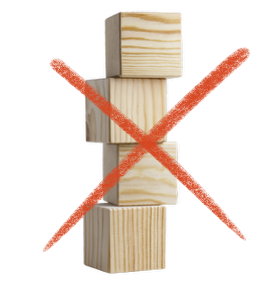 Your spine itself is not a stack of fragile bricks. Your whole body is a biotensegrity structure: a system of tension and compression, of pathways, where your arms are attached to your low spine, where your tailbone is connected to your femurs, where nothing is isolated and everything communicates.
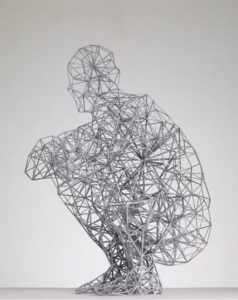
https://www.artsy.net/artwork/antony-gormley-exposure-maquette-1
And your spine has different sections with different roles. Your cervical spine (neck) moves your head and has a particular range of motion in all directions: flexion, extension, rotation, lateral bend. Your thoracic spine is attached to your ribcage and has a different range of motion in those directions. Your lumbar spine (lower back) is closer to the pelvis and moves in those directions differently still. A neutral spine is not a straight spine. A neutral spine is a multi-curve spine, buoyant, alive, and unique to your own biography and biology.
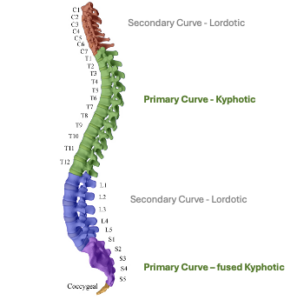
So, when someone tells you to “straighten your spine,” what they really mean is: don’t let one section take all the load. Distribute it. Use the whole body.
The Wisdom of Anchoring and Stretching
Here’s a simple way to understand how to move wisely: anchor and stretch.
Try this right now. Raise one hand above your head, then lower it. Now raise it again, but this time make your hand really active. Spread your fingers, feel what happens in your arm. Then let your hand go completely placid. Notice how heavy your arm feels?
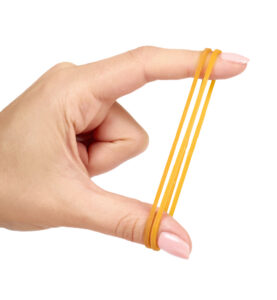
When we move with awareness, we’re not just swinging a body part through space. We’re anchoring at one end and stretching from the other, like a rubber band under just enough tension. The more we can use the whole body in this way, finding stability at the center of gravity (the pelvis and deep core) while lengthening through the extremities, the more we distribute the load, the more supported the bones, the more fluid the movement.
Think about folding forward. If the hips or knees are locked, the stress must go somewhere, usually up into the low spine. But if we ground through the soles of the feet and take the range of motion along the whole back line of the body (from the bottom of the feet, up through the calves, hamstrings, back muscles, over the crown of the head), we’re working with the body’s own architecture rather than against it.
The anatomist Tom Myers traced this “superficial back line” in cadavers: a continuous pathway from the soles of the feet all the way over the crown of the head. When we fold forward with awareness, we’re not rounding at one little hinge point. We’re stretching the whole line. This is healthy even with low bone density. I would even say especially if we have low bone density.
The Breath as Architecture
Yoga has something to offer that standard movement instruction often misses: the breath as structural support.
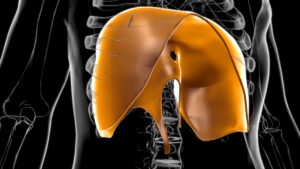
Your diaphragm bisects the torso. It attaches along the lower ribs, domes upward, and on every inhale, it descends, drawing air in and gently stretching the lungs and heart downward. On every exhale it rises, compressing slightly, pushing air out. The ribs respond: expanding out and up on the inhale, receding on the exhale.
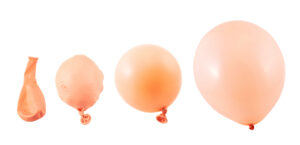
When you breathe fully, you create intra-abdominal pressure, like inflating a balloon inside your core. That pressure is structural. It supports the spine. It stabilizes the bones as you move through space or lift something heavy.
If you only breathe shallowly, your balloon isn’t very full. Your spine has less support.
(This is not to say that you have to be breathing deeply every second of the day, only that breath can be supportive of the spine so the more we understand that we can utilize the breath in wise ways as we move.)
In my Yoga for Vital Bones classes, we practice what is called in Viniyoga directional breathing. On the inhale, the ribcage widens starting at the very top, under the collar bones. The belly softens and expands only after the lungs fill. The front of the spine lengthens. On the exhale, the belly draws back toward the spine, the ribcage recedes from the bottom to the top, and the back of the spine feels lengthened. This is not complicated breathing. It is simply becoming aware of what the breath is already doing and then learning to use it consciously.
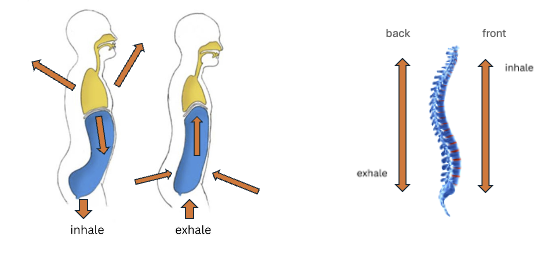
When you fold forward, you exhale and draw the belly toward the spine, supporting the spine from the inside. When you rise back up, you inhale. When you lift something heavy, you recruit your muscles, and you also recruit your breath. This is what all the weightlifters in the gym are doing, whether they know it or not. The difference is they are often stopping the breath to create that pressure in the torso for bracing. This is necessary for heavy lifting. Not necessarily needed for movement in yoga, which mimics more closely how our bodies move off the mat in daily life.
You can practice this right now. Place one hand across your collarbones and the other low on your belly, thumb near your navel, fingers spread toward the pelvis. Just notice what your breath is already doing. Then, on your next exhale, consciously draw the belly gently back and keep that tone as you let the inhale come in. Feel the ribcage expand, then let the belly soften. Exhale, draw the belly back, then the ribcage recedes. Notice slight separation of space between the hands on the inhale and drawing closer on the exhale? That’s the architecture of this directional breathing working for your spine.
This is yoga at its most practical.
Yoga Is Not One-Size-Fits-All
The standard “do this, don’t do that” handouts that circulate in the bone health world are intended to help but I believe they are misleading.
Yoga is not a one-size-fits-all program. You cannot simply list poses that are safe and poses that are not, because each of us has a different fracture risk, a different capacity in our bodies, a different understanding of where we are in space, a different fitness level, and yoga experience. Someone who has been practicing yoga for decades and has a DEXA scan result of −2.5 is in an entirely different situation from someone who has never been on a mat, is quite frail, and has a score of −4.0.
I am an ambassador for the Bone Health and Osteoporosis Foundation, and I deeply appreciate their work. But when their handout lists Parivrtta Trikonasana (Revolved Triangle) and Ardha Matsyendrasana (Half Lord of the Fishes) in the “Avoid” column (two poses that Dr. Loren Fishman includes in his own research-backed series of twelve yoga poses for bone health), you begin to see the complexity of the situation, which I talk more about in this blog: What yoga poses should I do or not do since I have osteoporosis?
The poses themselves are not the issue. Done with alignment, awareness, breath support, and appropriate preparation or modification, they may be perfectly fine for most people. A yoga teacher who is trained in bone-informed yoga can help you avoid any poorly executed version of the pose that might compromise your bones.
This is why I teach rather than hand out lists.
(And that is why I teach teachers how to teach bone-informed yoga: learn more here.)
We Are Moving All of It
Yoga presents a model of the human system as five dimensions: the physical body, the attentive mind, behavioral patterns, emotional depth, and spirit (breath, life force). When we move, we are moving all these dimensions simultaneously. They are interconnected and interdependent.
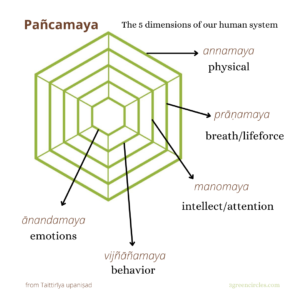 This is not mystical language. It’s a practical model. Our emotions affect our posture. When we are sad or carrying heavy things emotionally, the body follows. Shoulders roll forward, the chest closes, the breath shallows. This is a physical response to a non-physical state. When we work with the breath, we work with the mind and emotions. When we work with the body, we create space for the spirit/breath.
Yoga offers three practical tools that work together:
- Asana (the poses): putting the body into positions that build strength, balance, and range of motion
- Pranayama (the breath): using the breath to create support, stability, and presence
- Drishti/Bhavana (focus & attention): keeping the mind present with the body, rather than wandering off to the grocery list
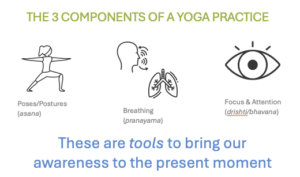
The practice on the mat is preparation for movement off the mat. For the moment you lean down to pick up your grandchild, for the moment you reach overhead for something on a high shelf, for the moment you back the car out of the driveway, etc., etc..
In Yoga for Our Vital Bones, we practice bone-informed yoga slowly so we can move wisely both on and off the mat.
A Practice at a Time
Moving your bones wisely is not about memorizing a list of forbidden movements. It is about developing a relationship with your own body: understanding what you’re moving when you move, learning to anchor and stretch rather than collapse and lock, learning to use the breath as structural support from the inside out. Using your hands, fingers, feet, and toes.
It takes time. It is a practice.
And it is available to every one of us, regardless of our diagnosis, our age, or our fitness level. We are not fragile. We are complex, interconnected, and adaptable. Our bones are listening to us every time we move, every time we breathe, every time we choose to engage with our bodies rather than fear them.
Let’s keep moving, wisely and well.
Carrie Heeter
Posted at 14:00h, 09 June“Your whole body is a biotensegrity structure: a system of tension and compression, of pathways, where your arms are attached to your low spine, where your tailbone is connected to your femurs, where nothing is isolated and everything communicates.”
Love this!!!
Mary Beth Ray
Posted at 00:36h, 07 JulyIt’s so true, right? You can feel it in your bones 😉